.jpg)
There was a time when a retailer controlled the flow of product information.
The physical store introduced categories, explained differences between products, and influenced comparison through the way merchandise was organised. A customer's understanding of a product developed inside the store because that was where information was concentrated. The arrangement of shelves, displays, and promotional signage determined not only what people noticed, but also what they considered.
Today, a significant part of the buying journey takes place before the customer enters the store. Search engines answer technical questions within seconds. Product reviews are available in overwhelming numbers. Demonstration videos reveal features that once required a salesperson. Comparison websites reduce complex categories into tables that can be understood in minutes.
By the time customers reach a retail environment, they are rarely encountering products for the first time. More often, they are returning to products they have already researched.
That shift has altered one of the oldest assumptions in merchandising.
The shelf is no longer competing with the shelf beside it.
It is competing with every piece of information that shaped the customer's thinking before the visit ever (even) began.
What Does The Customer Still Need From The Store?
The answer differs from category to category, but the pattern is becoming remarkably consistent.
Consider someone purchasing a premium office chair after several days of online research. They may already understand lumbar support, mesh construction, adjustable armrests, warranty terms, and pricing across multiple brands. None of those questions necessarily bring them into the showroom.
What they still cannot determine with certainty is whether eight hours of sitting will feel comfortable. Whether the seat depth works for their posture. Whether the material feels appropriate for daily use. Whether the chair feels worth the investment compared to the alternatives they shortlisted.
The information gap has narrowed considerably. The confidence gap has not.
This distinction matters because it changes the purpose of the physical environment.
Retail spaces are contributing less to product discovery and more to purchase validation. The customer is no longer asking, "What are my options?" They are asking, "Which of these options deserves my decision?"
Those are fundamentally different questions, and they demand fundamentally different environments.
More Information Has Made Decisions Harder
One of the paradoxes of digital commerce is that increasing access to information has not necessarily made purchasing easier.
Behavioural research has consistently demonstrated that an abundance of choice can increase cognitive effort rather than reduce it. Customers evaluating similar products frequently encounter specifications that appear important without understanding their practical significance. They compare ratings generated by thousands of different users, consume conflicting recommendations across multiple platforms, and discover that every product seems to excel according to a different reviewer.
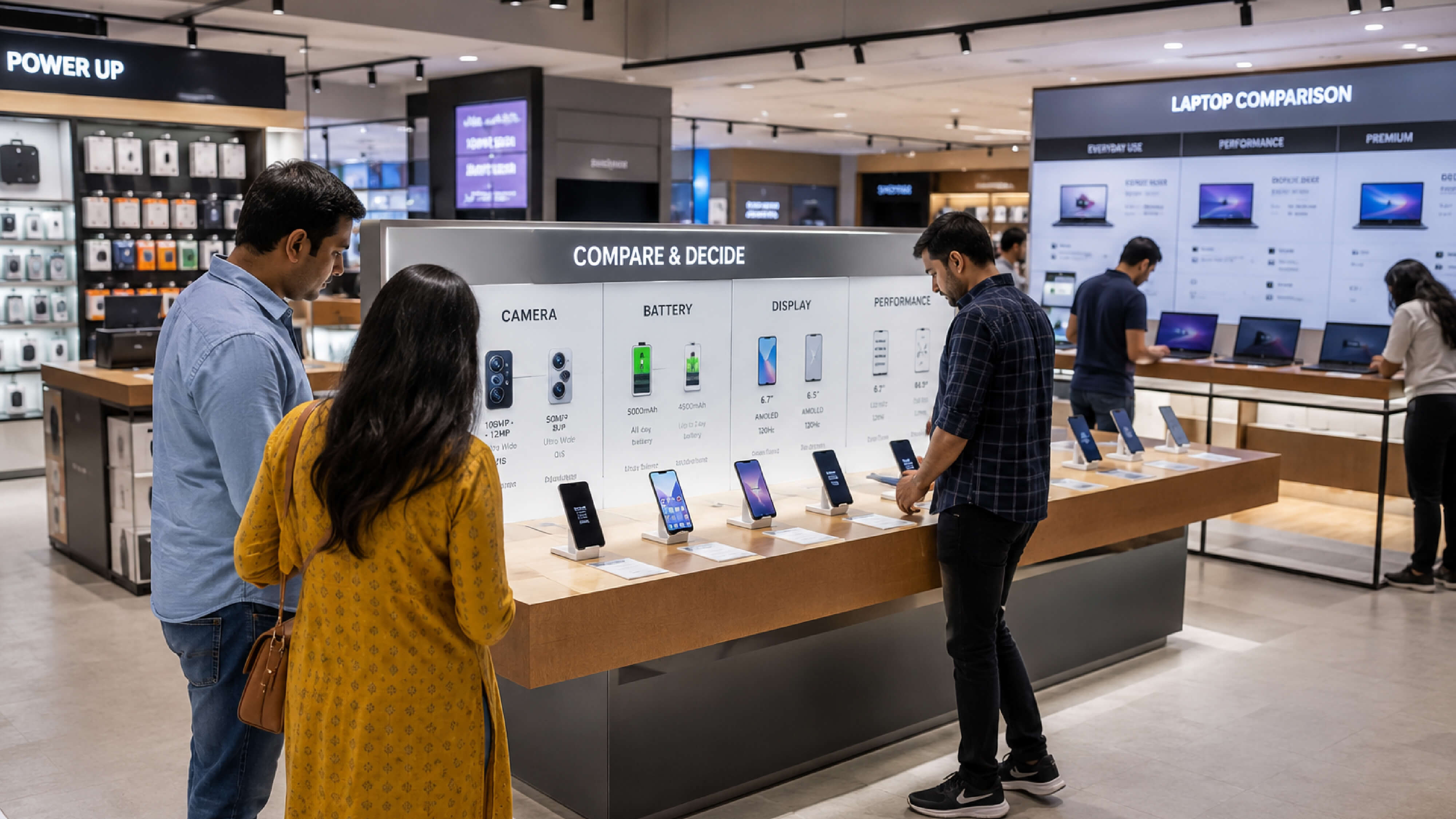
Knowledge expands. Confidence does not always expand with it. This is where physical retail regains strategic relevance.
A customer comparing decorative laminates may have already shortlisted finishes online, yet still hesitate because colour behaves differently under natural light than it does on a phone screen. Someone evaluating modular storage systems may understand dimensions perfectly while remaining uncertain about accessibility, ergonomics, or finish quality until interacting with them directly.
The store answers questions that emerge only after digital research has reached its limits.
That responsibility is considerably more demanding than introducing products.
It requires the retail environment to help customers interpret information they already possess rather than replace information they lack.
If Customers Already Know the Product, What Should Merchandising Do?
The effectiveness of merchandising was measured by visibility. The products that occupied the most prominent locations attracted the greatest attention, and attention translated into consideration. End caps, eye-level shelving, promotional islands, and high-traffic displays were all designed around the same principle: make the product easier to notice than the alternatives around it.
Visibility matters far less when customers arrive looking for products they have already identified elsewhere. A shopper who enters a consumer electronics store asking to compare two specific models has already moved beyond discovery. Likewise, someone walking into a home improvement showroom with screenshots, saved links, and measurements has little interest in browsing the entire category. Their objective is narrower. They want to resolve the uncertainty that remains after extensive research, not restart the search from the beginning.
Merchandising therefore serves a different purpose. Its success depends less on attracting attention than on helping customers compare, understand, and evaluate products efficiently.
That distinction influences decisions that appear purely physical but are increasingly cognitive in nature. Which products should sit beside one another? Which features deserve immediate explanation and which can wait for assisted selling? Where should customers be encouraged to interact with products rather than simply observe them? How much information should be communicated through Retail Signage, and how much should emerge through experience?
The objective is no longer to maximise exposure across the greatest number of products. It is to reduce the effort required to compare the products that matter most to the customer standing in front of the display.
Good merchandising has always organised products.
Increasingly, it organises decisions.
Why Furniture & Fixtures Are Being Asked to Do More Than Hold Products
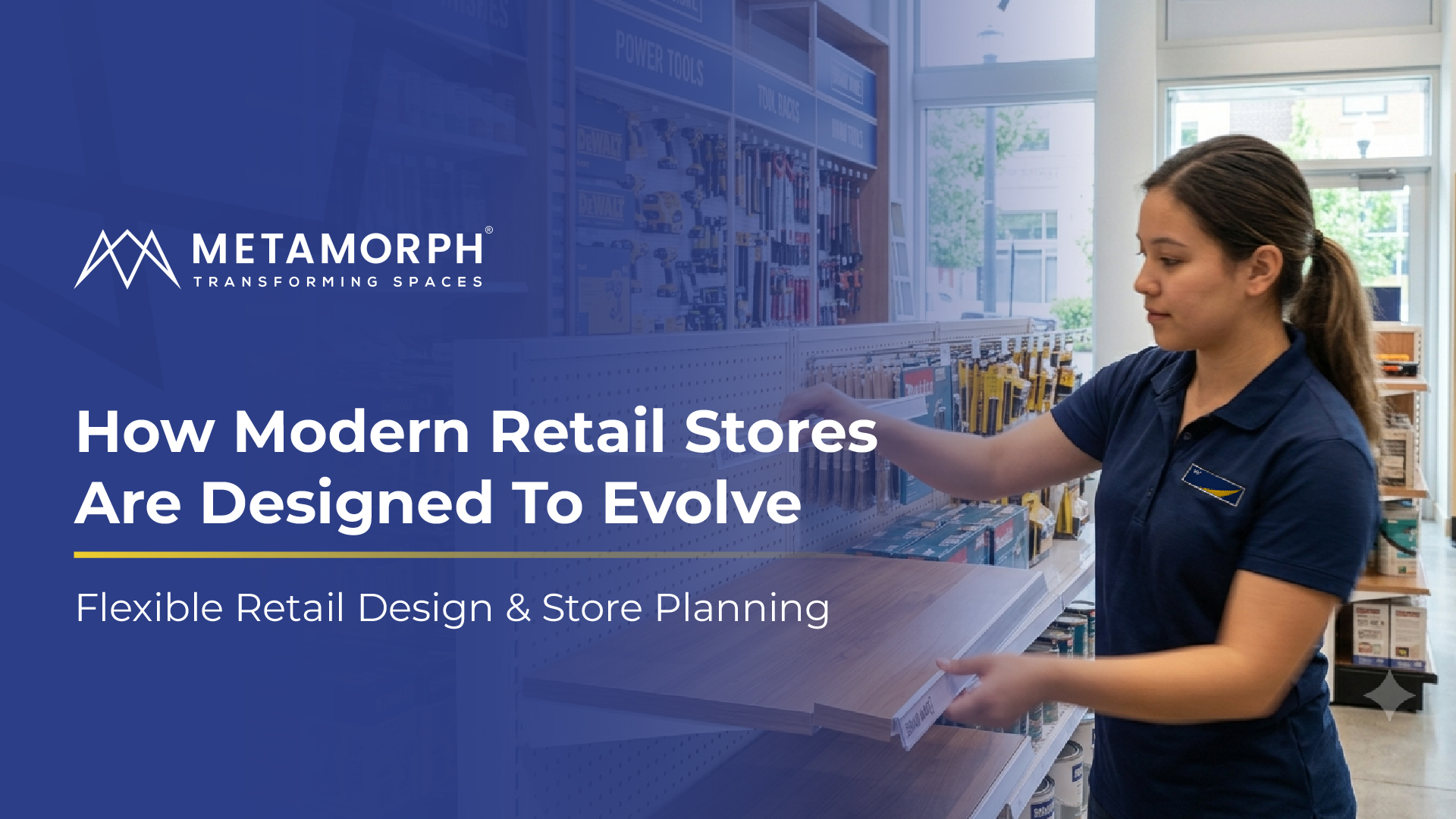
One of the more significant changes in retail is that Furniture & Fixtures are becoming active participants in the buying journey rather than passive elements within the environment.
This shift is not always obvious because the fixtures themselves may appear familiar. Shelving systems, display tables, wall bays, and product stands continue to perform their traditional role of presenting merchandise. What has changed is the expectation placed upon them.
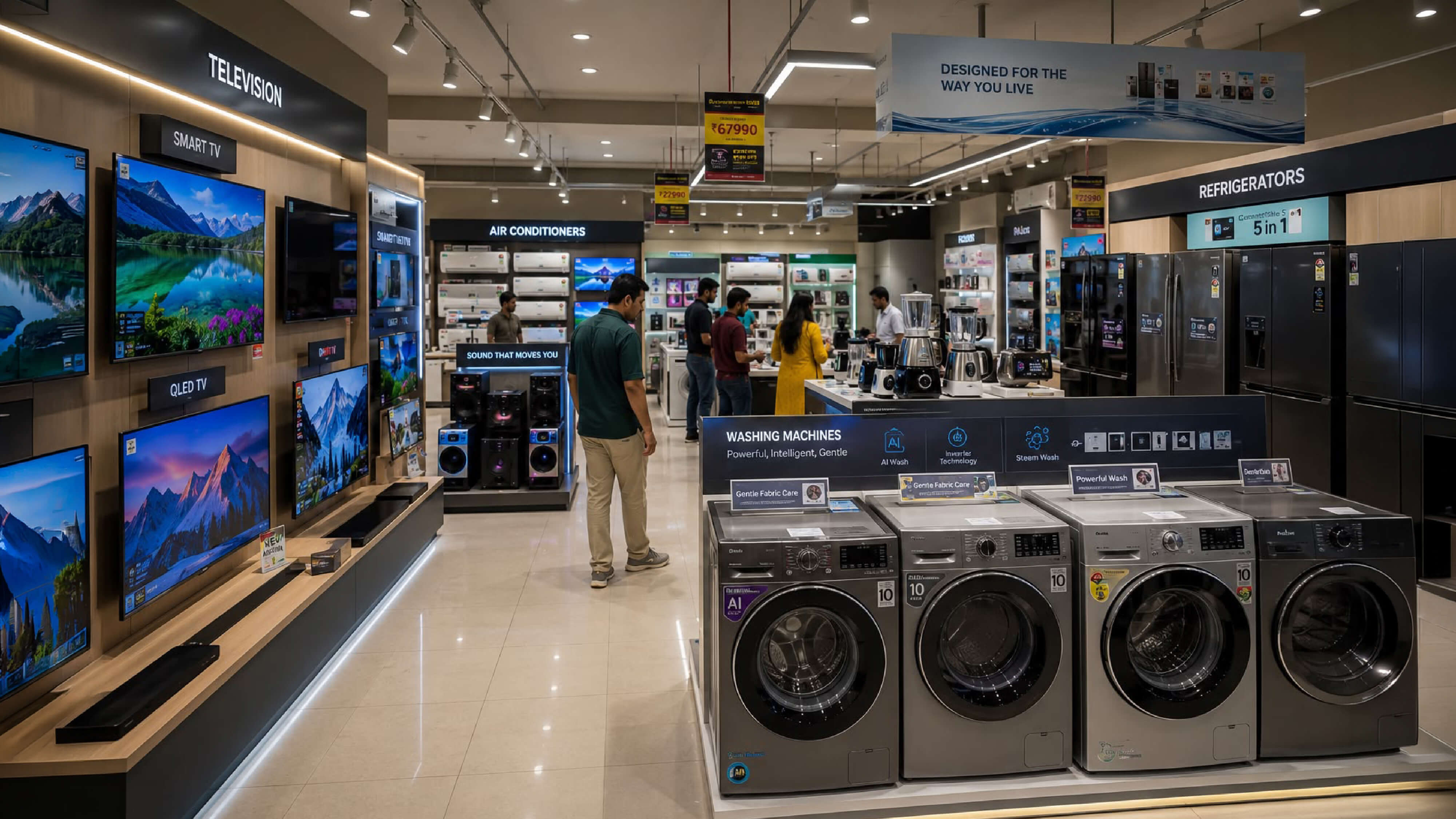
A display table in a premium beauty environment may be designed to encourage customers to test products before seeking assistance. A fixture within a sports retail store may bring complementary products together because customers increasingly purchase solutions rather than individual items. A display in a lighting showroom may allow the same luminaire to be experienced under different colour temperatures, helping customers understand a specification that is difficult to appreciate on a product page.
The effectiveness of a fixture is therefore measured differently than it once was.
As retail environments become more experience-led, Furniture & Fixtures begin to influence how customers move through information rather than simply how they move through space. The physical environment starts functioning as an interface between digital research and physical evaluation, allowing customers to test assumptions they formed before entering the store.
The effectiveness of a fixture is therefore measured differently than it once was.
Its value lies not only in how well it displays a product, but in how effectively it helps a customer decide whether that product deserves to leave the store with them.
Conclusion
The evolution of e-commerce has not reduced the importance of physical retail. It has changed the questions that physical retail is expected to answer.
Customers now arrive having completed much of the research that once happened inside the store. What remains unresolved is rarely factual. It is experiential. They want to understand how a product feels, how it compares in a real setting, and whether it justifies the decision they are about to make. That is why merchandising, Retail Signage, Furniture & Fixtures, and display planning are becoming more sophisticated. Their role is no longer limited to presenting products; they are expected to make complex decisions easier.
At Metamorph, this shift informs the way we approach retail transformation. We believe the most effective retail environments are not those that display the most products, but those that help customers leave with greater confidence than they arrived with.