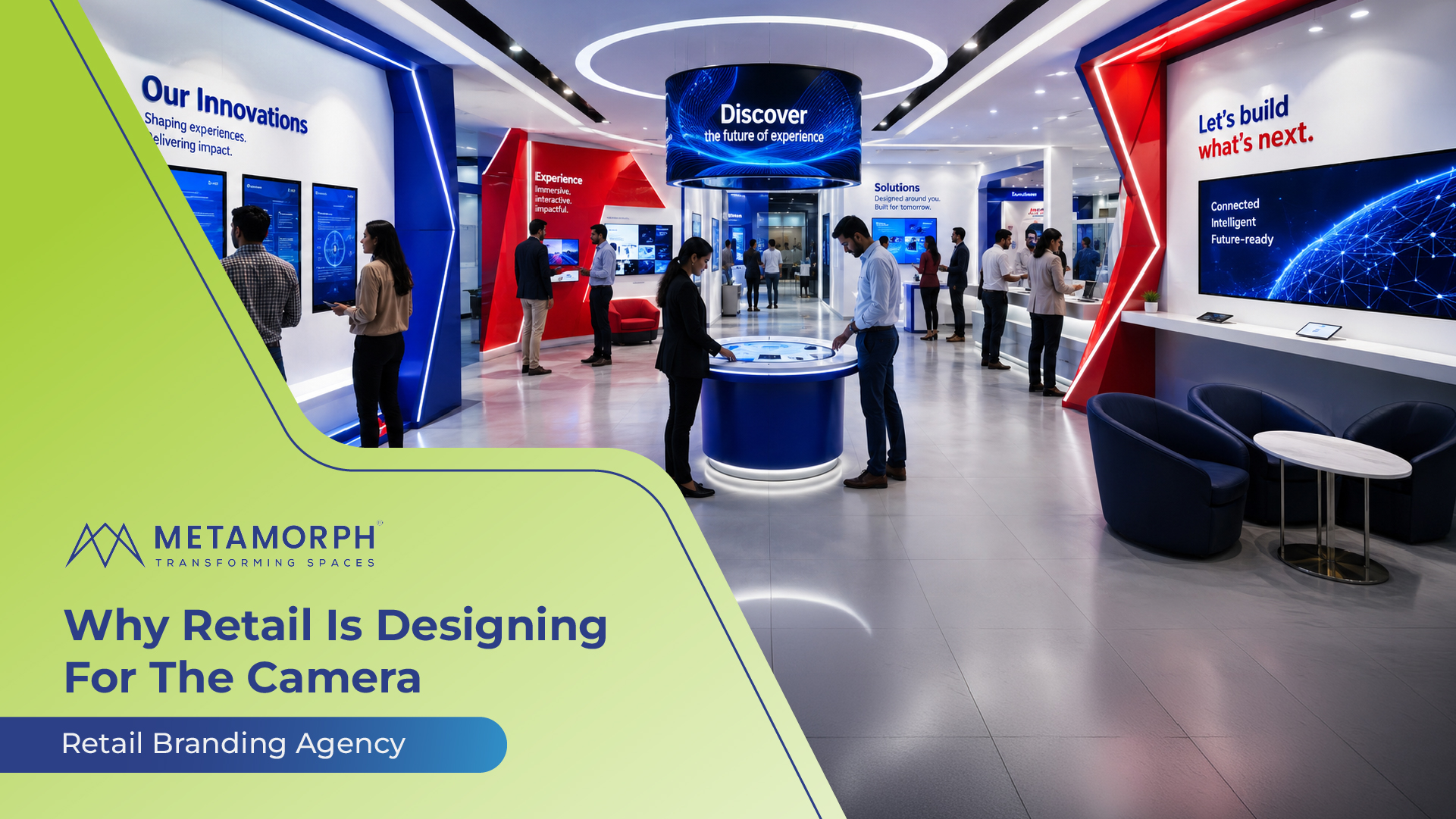
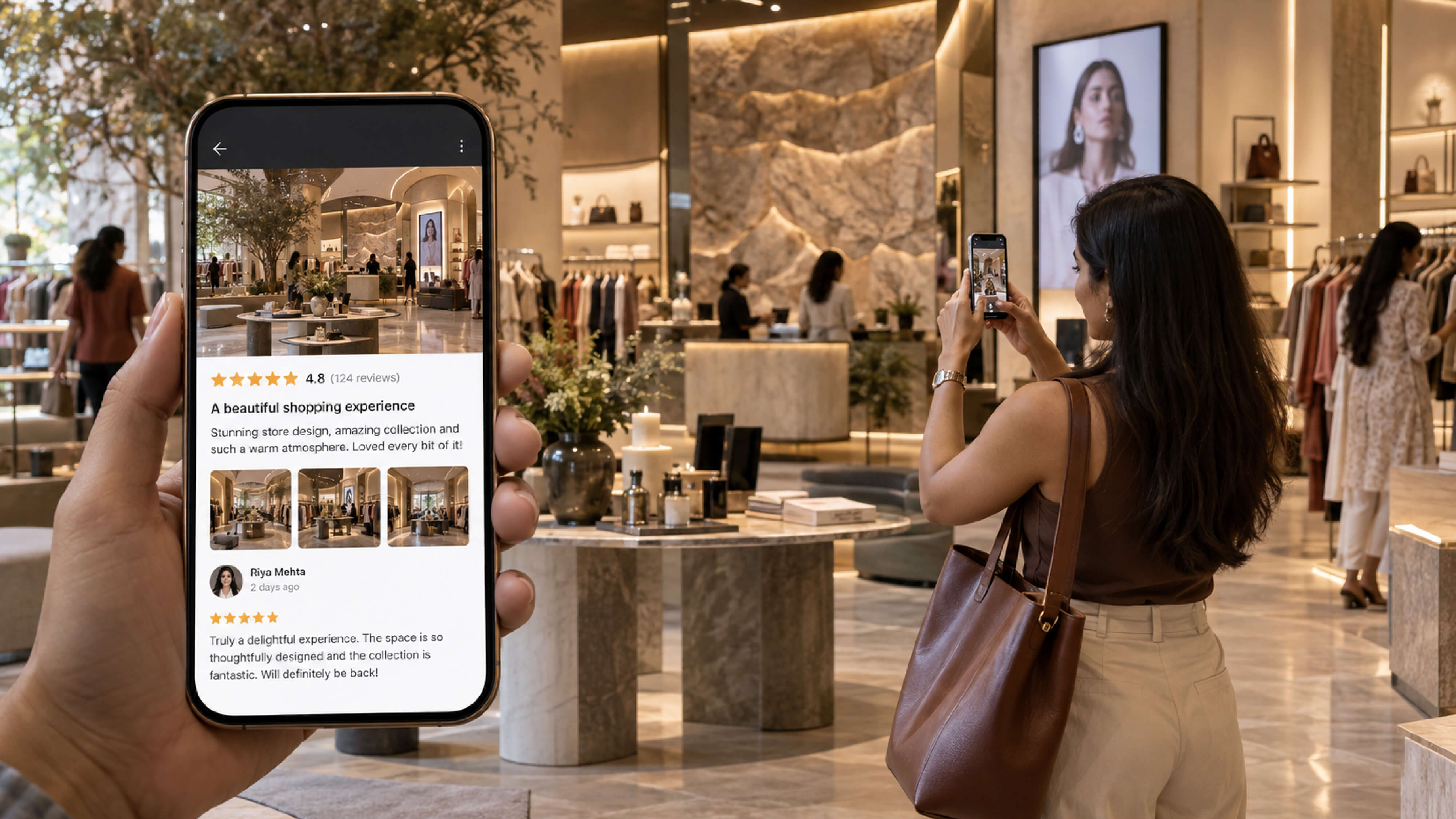
For most of retail history, every design decision served the customer standing inside the space. The store was experienced as a complete environment, with its façade, signage, displays and branded elements working together across the visit. That audience has expanded. A new store can now reach people through a Google listing, a creator walkthrough or a customer photograph before they enter it.
The screen presents a very different version of the store. Someone may see the entrance from across the street, a fixture in the middle of a Reel or a single display in a review. The physical environment remains intact, but the way people encounter it has become selective.
That has consequences for the systems behind the retail environment. Retail Branding has to hold its identity across the physical touchpoint and the fragments that travel beyond it. Signage, fixtures, displays and digital elements can each become the part of the brand that someone remembers.
The question is no longer only how the retail environment works as a whole. It is also how much of that identity survives when the whole is no longer visible.
When Retail Signage Carries The Whole Brand
A storefront sign has a clear role within the physical environment. Its position, scale and illumination are considered alongside the rest of the façade. Once that façade appears in a photograph, the surrounding context can shrink to a few pixels around the sign. The sign may become the strongest visual identifier left in the frame.
The same shift happens inside a store. A feature display can become the setting for a creator's video. A particular fixture might appear repeatedly in customer content. A branded surface may become more recognisable online than elements that occupy far more physical space.
This puts greater pressure on the relationship between individual elements and the wider brand system.
A strong Retail Branding approach gives those elements a clear visual connection to the brand. Colour, proportion, materials, typography and detailing all have a role in maintaining that connection. The logo remains important, but recognition can also come from the way those elements have been resolved together.
Retail Signage is a useful example because it operates across several scales at once. A sign must communicate from the road, sit correctly within the façade and remain legible when the storefront becomes a photograph. The physical specification therefore affects the digital impression as well.
The same principle extends into the store. A fixture or display can contribute to recognition through its material language and detailing, particularly when the surrounding environment falls outside the frame.
This makes the individual element more consequential. It has to belong convincingly to the system, even when the system itself cannot be seen.
.jpg)
Designing For The Camera Means Accounting For The Frame
The phrase “designing for the camera” can easily lead to the wrong conclusion. A visually dramatic store may photograph beautifully and still communicate very little about the brand.
The difficulty lies in the fact that the final image is usually uncontrolled.
Customers choose where to stand. Creators decide what enters the video. Search listings can show whichever view gets uploaded. A feature designed to work within a wider composition may appear alone, while an important brand element may disappear completely.
That makes framing a practical consideration in retail execution.
The brief needs to establish which physical elements carry recognition and how much context they require. Furniture & Fixtures are a good example. Their purpose begins with product presentation and store functionality, yet their form, material and detailing also influence what the customer sees in photographs. When a fixture becomes a recurring visual in content, those decisions become part of the brand experience outside the store.
Material choices matter in the same way. Reflective finishes can introduce glare. Dark surfaces can lose definition. Lighting can alter colour and texture once the environment is recorded on a phone. A large physical feature can also lose its intended impact when compressed into a vertical frame.
These details rarely live in isolation. They affect how a branded element is perceived when the surrounding environment has been cropped away.
For a Retail Branding Agency, that means considering visibility while the system is being developed. The placement of signage, the relationship between branded elements and product, and the detailing of fixtures all contribute to how clearly the brand survives through partial views.
Digital Signage adds another layer because its message can change while its physical position remains fixed. The screen can appear in content repeatedly, but what it communicates may change from one moment to another. Its role therefore sits somewhere between a permanent retail element and a continually changing brand surface.
The aim is not to make every part of the store camera-ready in isolation. It is to ensure that the elements most likely to be captured still make sense as part of the brand.
When The Store Keeps Communicating After The Visit
The role of the physical environment used to be closely tied to the visit itself. A customer arrived, experienced the store and left with an impression of the brand. That impression can now travel further through the same physical elements.
A storefront photograph can remain in search results. An interior video can continue circulating long after the original visit. A customer photograph can introduce a product display to someone who has never seen the store. The physical environment keeps appearing through content created around it.
This gives In-Store Branding a longer communication life. A signage treatment can become familiar through repeated photographs. A fixture can become associated with the brand because it keeps appearing in videos. A display can take on a role in brand recognition beyond the location where it was installed.
For the teams responsible for retail transformation, that makes the physical touchpoint part of a larger communication system. The work has to account for how branded elements function in the environment, how consistently they are executed across locations and how clearly they continue to represent the brand once they leave the physical setting.
The camera has expanded the audience for retail, but the larger shift is about how the environment is being consumed. People can encounter a brand through a fragment long before they experience the whole.
For Metamorph, that makes the consistency of the physical brand system increasingly important. Retail Branding, Signage, Furniture & Fixtures and execution have to work together closely enough for an individual element to carry the identity of the larger brand.
A retail environment may be encountered one frame at a time. The system behind it has to make those frames feel unmistakably connected.