Retail stores are designed to last. Retail businesses are designed to evolve.
The two have rarely moved at the same pace.
A retail environment may remain operational for years, while the business inside it changes far more frequently. Product categories expand. Seasonal campaigns reshape merchandising. Digital experiences become part of the customer journey. Customer expectations continue to evolve. Even store formats adapt as brands respond to new markets and changing patterns of consumption.
This shift is changing how retail environments are planned. Longevity is no longer measured solely by how well a store withstands daily use. Increasingly, it is measured by how well that store accommodates change throughout its lifecycle.
That evolution is influencing decisions long before a Retail Rollout reaches the site.
Why Retail Planning Now Extends Beyond Opening Day
Traditionally, a retail project was planned around a single milestone.
Store opening.
Layouts were developed around existing product ranges. Fixtures were engineered for current merchandising strategies. Retail Signage reflected active brand campaigns. Once the store opened, the objective was to preserve that environment for as long as possible. Retail operates differently today.
Collections refresh more frequently. Product launches introduce new display requirements. Digital screens replace static communication. Promotional zones evolve throughout the year. Shop-in-shop concepts are introduced within existing stores. Services such as assisted selling and click-and-collect continue reshaping how physical environments function.
The question during planning has therefore changed.
Rather than asking whether the store will work on opening day, retailers are increasingly asking whether it will continue working years later, after the business itself has evolved.
Adaptability Is Becoming An Execution Decision
Flexibility is often associated with movable fixtures or modular displays.
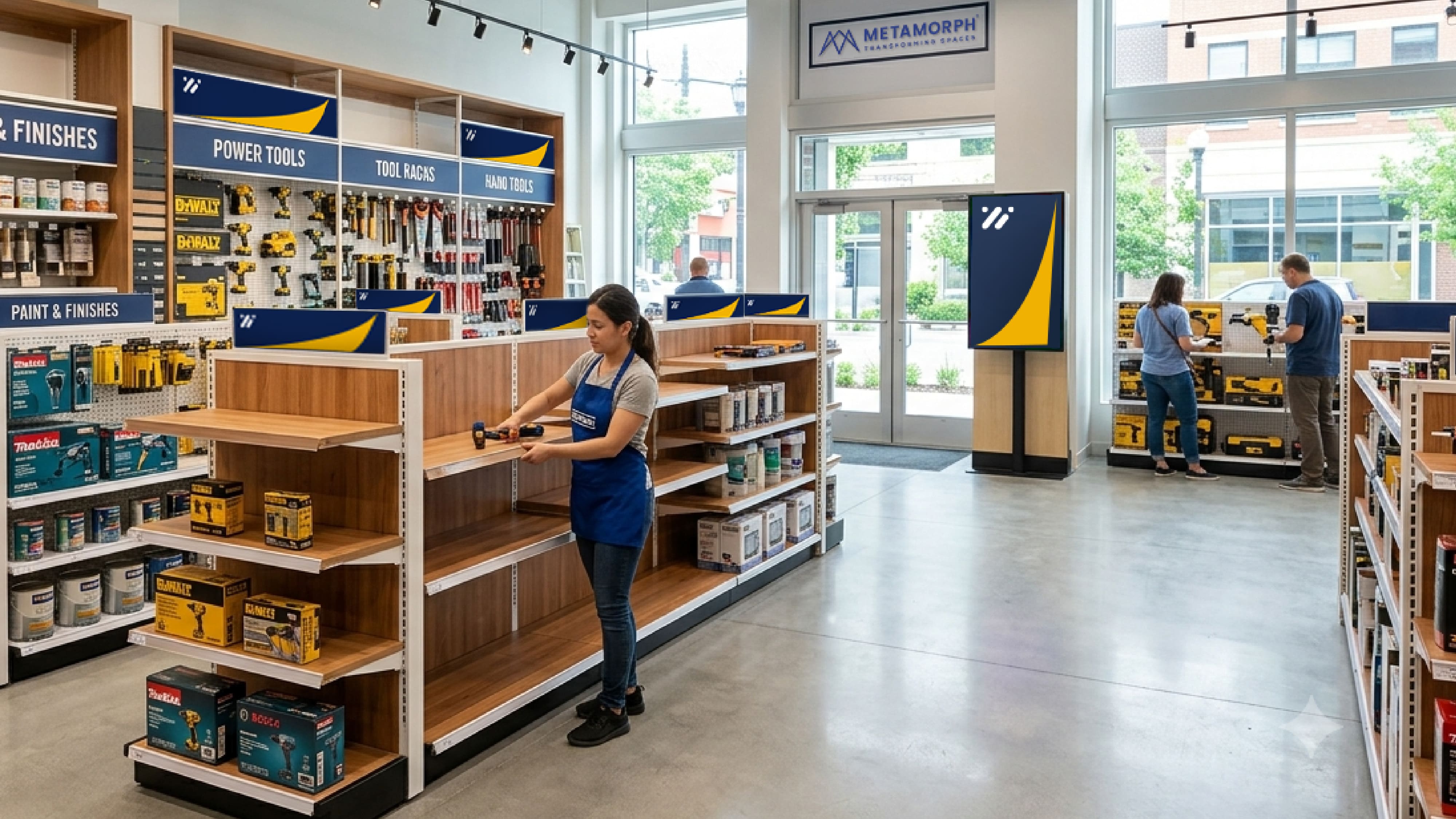
Whether a display system can be reconfigured, a digital experience integrated, or a merchandising zone expanded often depends on decisions made during planning, engineering, and technical development. Material selection influences future modifications. Structural detailing affects installation possibilities. Electrical infrastructure determines how easily digital elements can be introduced later.
These decisions rarely attract attention once the store opens. Yet they often determine how efficiently that environment can respond to future business requirements.
Adaptability has therefore moved beyond design preference.
Retail Fixtures Are Increasingly Designed As Systems Rather Than Objects
This shift is particularly visible in Retail Furniture & Fixtures.
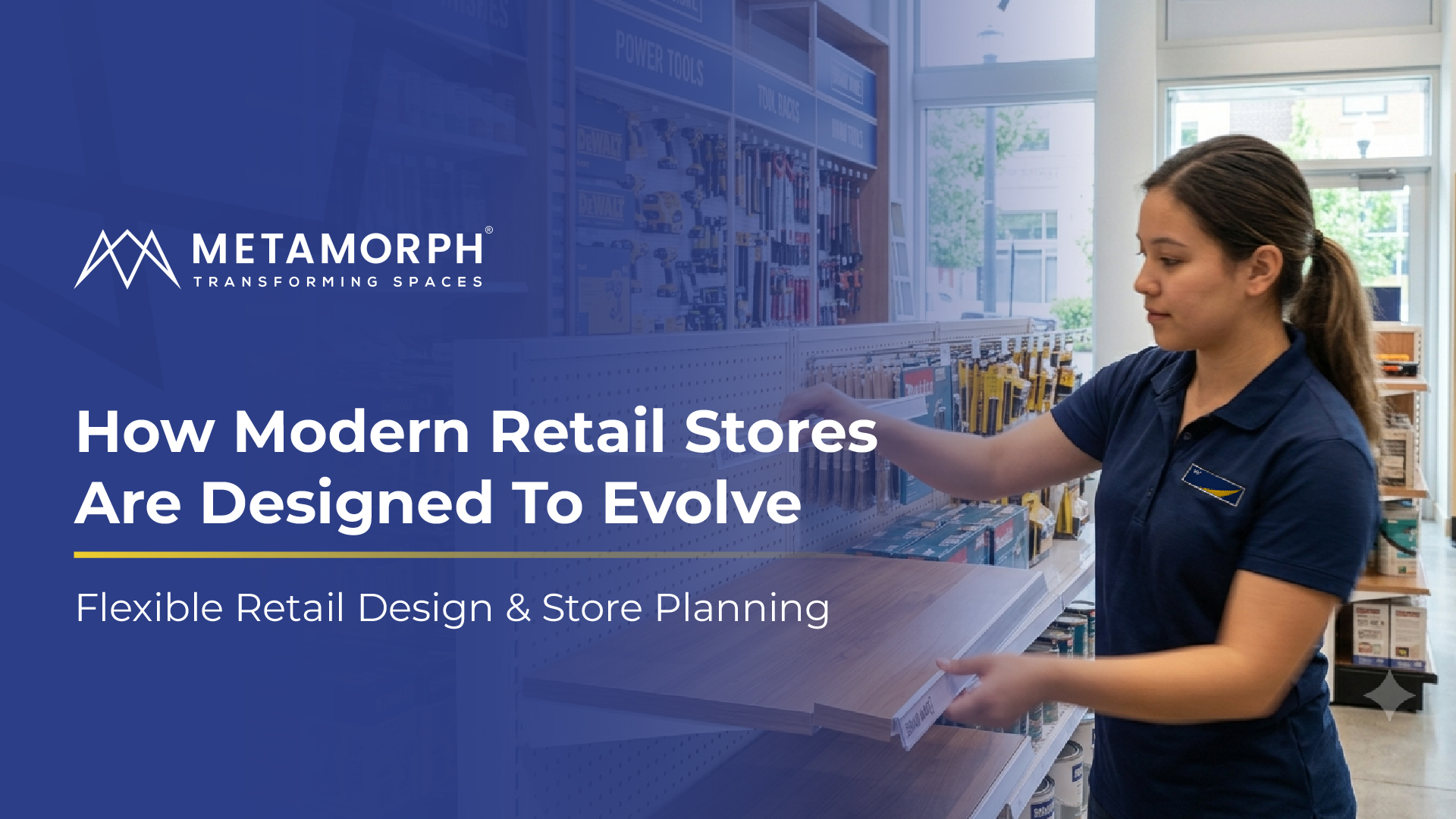
Fixtures were once expected to perform a single function throughout their operational life. Today, they are increasingly designed as flexible systems capable of supporting changing merchandising strategies, evolving product categories, and new customer experiences.
Display units accommodate interchangeable components. Shelving systems allow reconfiguration. Gondolas, feature displays, and merchandising fixtures are planned with future adjustments in mind rather than fixed, one-time layouts.
The objective is not to redesign the store every season.
It is to allow the business to evolve without rebuilding the environment around it.
For retailers expanding through multi-location rollouts, this approach also simplifies replication across stores while maintaining operational consistency.
Designing For Change Without Compromising Brand Consistency
Adaptability introduces an important challenge.
A retail environment must continue evolving without feeling different each time it changes.
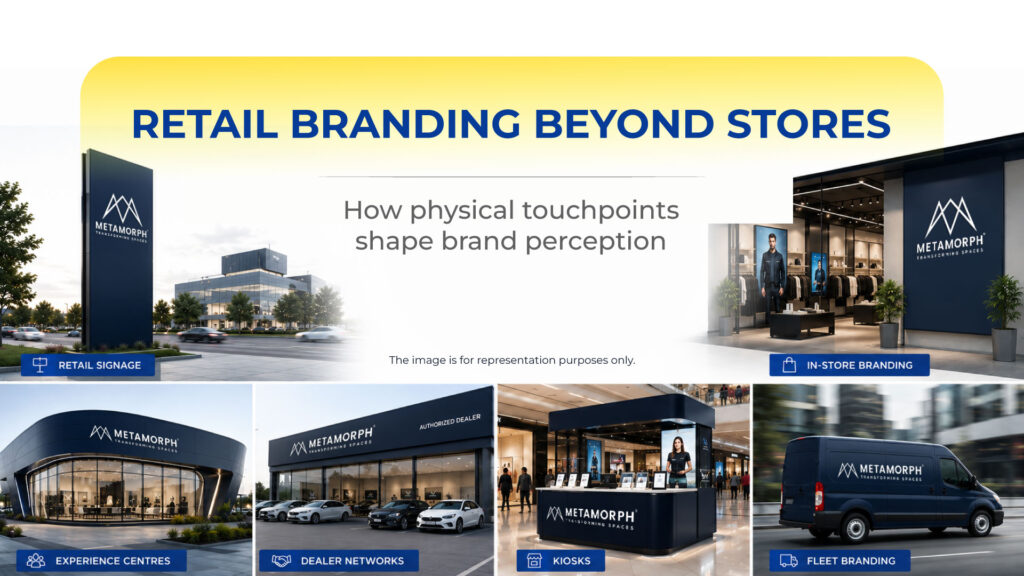
Customers expect familiarity regardless of when they visit or which location they enter. That expectation depends on more than Branding & Signage. It extends across material selections, fixture proportions, spatial hierarchy, digital integration, and merchandising systems.
The most effective retail environments distinguish between elements that define the brand and elements that support changing business needs.
Brand identity remains stable. The environment surrounding it is designed to adapt.
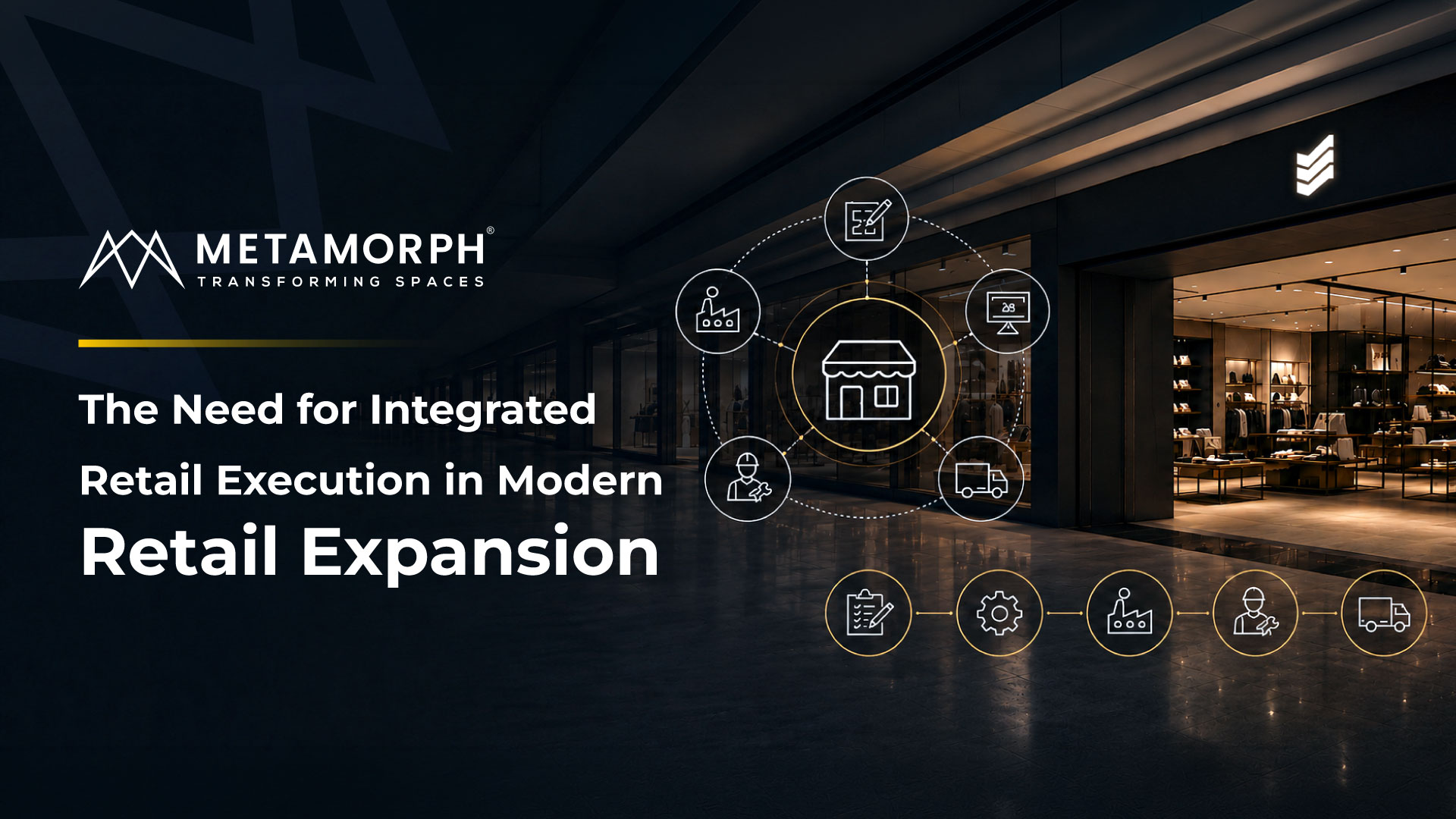
Maintaining that balance requires planning, design, production, and execution to operate as one connected system rather than isolated activities.
The Role Of An Integrated Retail Partner Is Expanding
Designing for longevity increasingly begins before design itself appears complete.
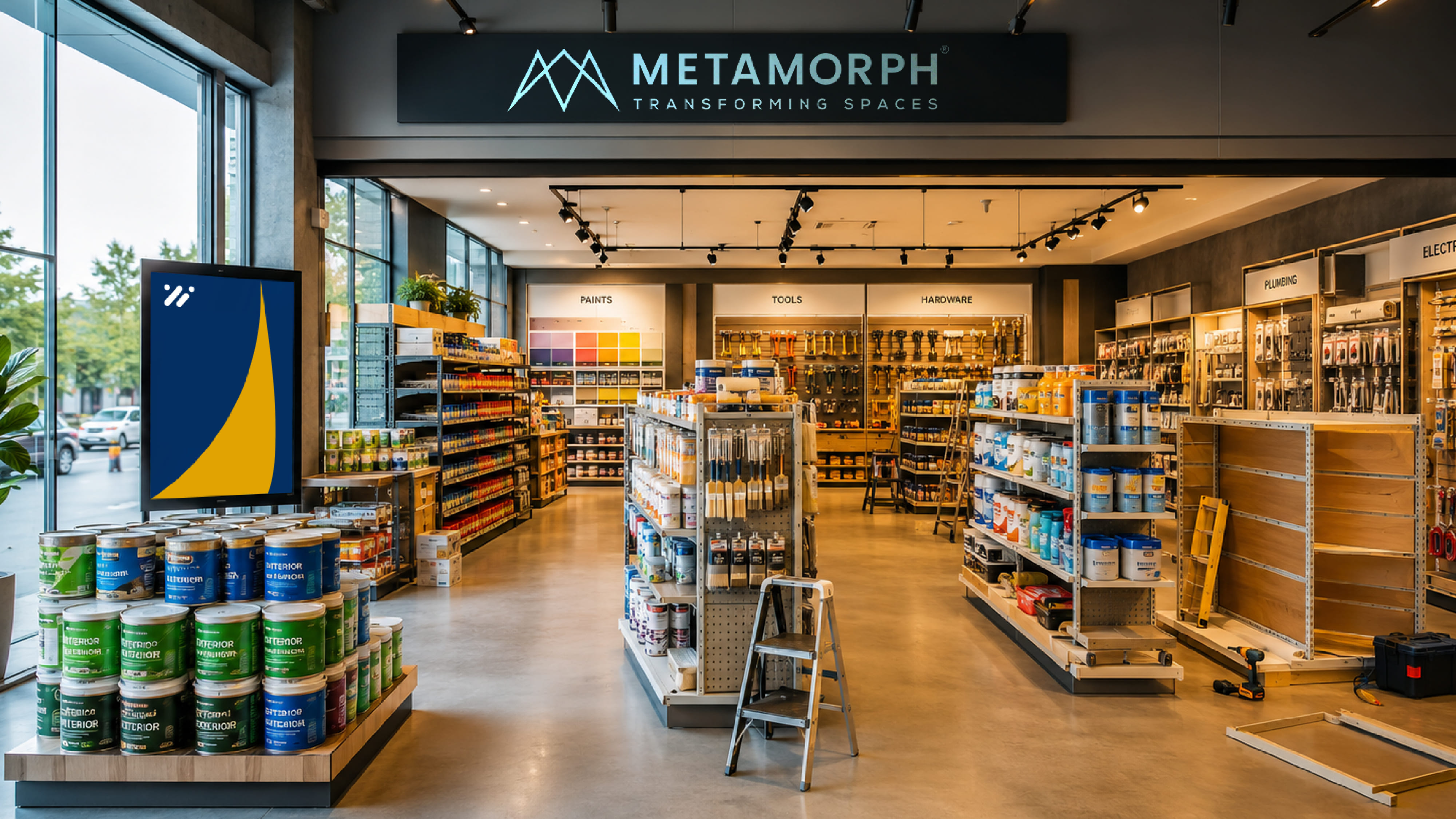
Planning influences engineering. Engineering shapes production. Production determines installation. Site conditions continue refining decisions throughout execution. Every stage contributes to creating an environment capable of evolving long after handover.
This has gradually expanded the role of an Integrated Retail Partner.
Retail execution is no longer limited to delivering a finished store. It increasingly involves creating environments that support future merchandising strategies, accommodate technological change, simplify maintenance, and preserve brand consistency throughout years of operation.
The store delivered today is expected to perform well beyond today's requirements.
Conclusion
One of the quieter shifts in modern retail is a change in how longevity is defined.
For decades, durability was considered the benchmark of a successful retail environment.
Today, adaptability is becoming just as valuable.
Retail stores are no longer expected to remain exactly as they were on opening day. They are expected to evolve alongside the businesses they support while continuing to deliver a consistent customer experience.
That perspective is shaping retail planning, Retail Signage, Furniture & Fixtures, engineering, production, and execution long before construction begins.
At Metamorph, this philosophy guides every Retail Rollout we undertake. As an Integrated Retail Partner, we approach retail environments not simply as projects to be completed, but as systems designed to accommodate change while maintaining consistency, operational efficiency, and execution quality throughout their lifecycle.
Because the most resilient retail stores are rarely the ones that resist change.
They are the ones that are built for it.
.jpg)