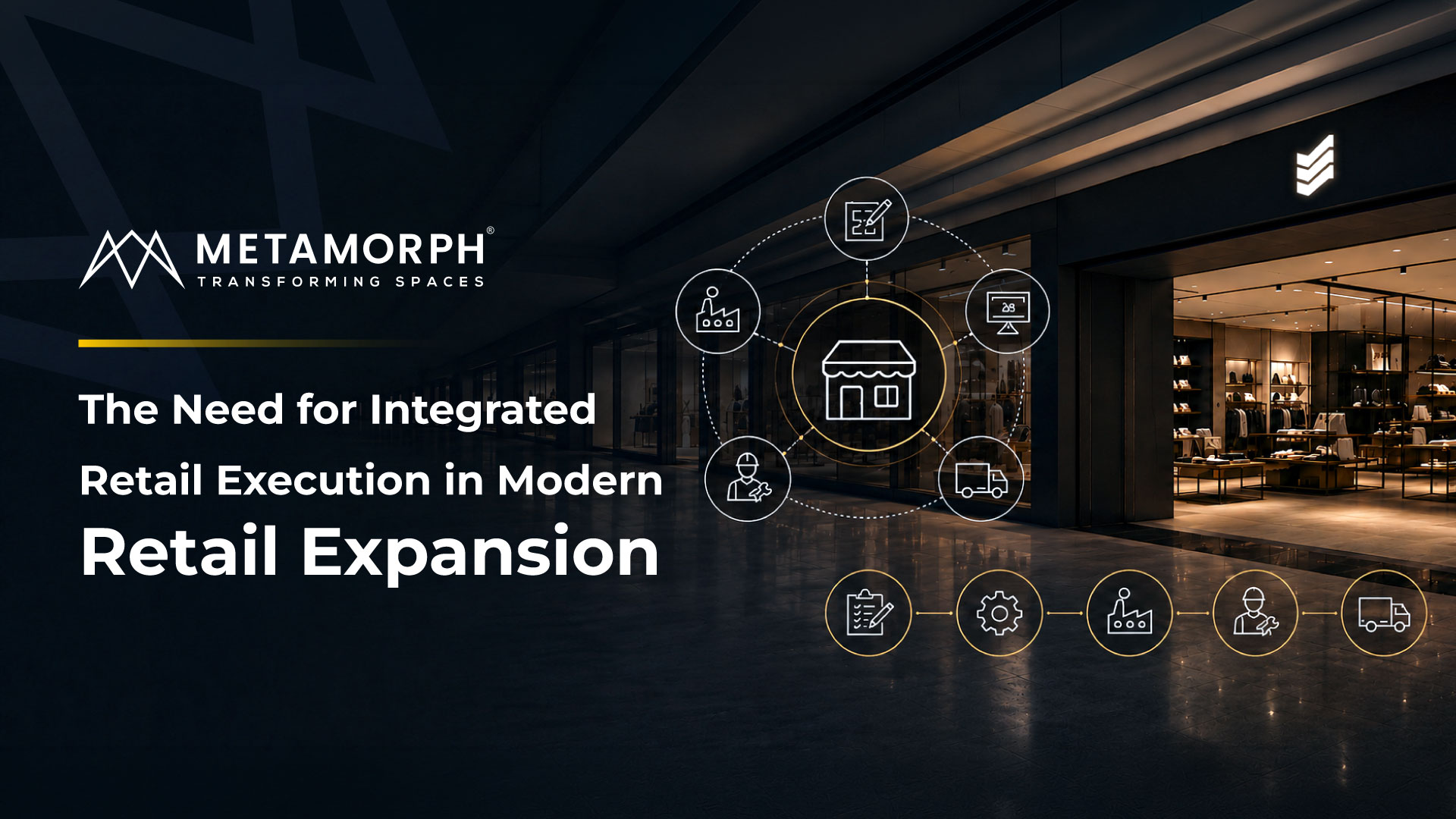
Retail expansion has become remarkably centralised. Retail execution has become remarkably interconnected.
That may sound like the same thing. It isn't.
A decade ago, the people approving a new store usually had direct visibility into how it would be delivered. Planning discussions happened alongside production decisions. Site teams worked closely with designers. Procurement, fabrication, and installation operated within a relatively small circle of people who could resolve questions with a conversation rather than a workflow.
Retail has grown well beyond that model.
A single Retail Rollout today may involve architects, procurement teams, surveyors, fabricators, logistics partners, landlords, installation crews, technology vendors, and regional contractors working across different cities and according to different timelines. Every participant contributes to the same store, but very few see the entire process unfold.
What eventually opens its doors is less a construction project than the convergence of hundreds of independent decisions.
That evolution has quietly changed what good retail execution actually means.

How Retail Rollouts Changed the Nature of Retail Execution
Retail execution is still often described as a sequence.
Planning leads to site recce. Site recce informs design. Design moves into production. Production is followed by installation.
The language makes the process sound orderly. Reality rarely behaves that way.
Large rollout programmes operate through overlap rather than sequence. While one team is validating measurements on site, procurement is already evaluating material availability against rollout timelines. Fabrication schedules begin taking shape while design adaptations continue to evolve. Installation planning starts before every production drawing has reached its final revision because opening dates are fixed long before the store is physically ready.
None of this reflects poor planning. It reflects the pace at which organised retail now expands.
Execution has gradually shifted from waiting for one activity to finish before another begins to allowing several activities to move together without losing alignment. The challenge is no longer keeping work moving. It is ensuring that every decision continues from the same understanding of the project.
That is where integrated execution begins to matter.
Why Integrated Retail Execution Is About Continuity, Not Coordination
Coordination is often treated as the defining characteristic of large retail programmes. Meetings are scheduled, responsibilities are assigned, timelines are shared, and updates circulate across teams.
Coordination keeps people informed.
Integrated execution keeps decisions connected.
There is an important difference between the two.
A site recce identifies an unexpected beam. That observation influences fixture dimensions, production drawings, installation sequencing, and sometimes even logistics planning. A material becomes temporarily unavailable. Procurement evaluates alternatives, but the decision also affects finish approvals, fabrication methods, and brand consistency across locations. None of these changes exist in isolation because every choice travels through the rest of the system.
The quality of a rollout therefore depends less on how efficiently individual teams perform and more on whether information retains its meaning as it moves from one stage to the next.
Retail execution has become an exercise in preserving continuity across decisions that are being made simultaneously.
Retail Signage and Store Branding Reveal How Connected the System Really Is
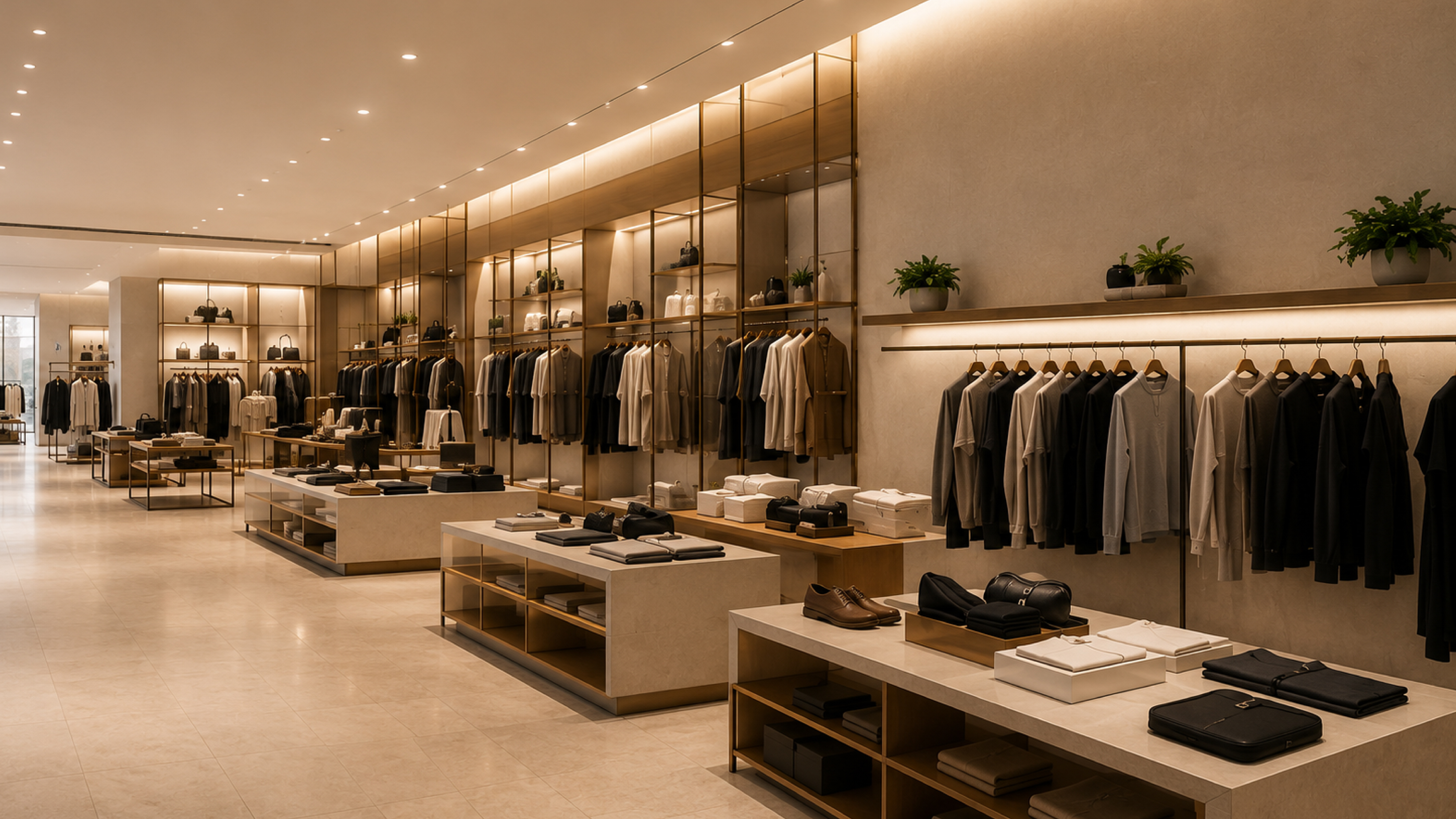
Few elements make this interconnectedness more visible than Retail Signage and Store Branding.
On paper, signage appears to be one deliverable among many. In practice, it carries the imprint of nearly every decision that came before it. Site measurements determine dimensions. Structural conditions influence detailing. Material availability shapes fabrication. Lighting conditions affect finish selection. Installation access changes sequencing.
By the time a fascia is installed, it reflects weeks of interconnected decisions made across different functions.
The same is true of In-Store Branding. Customers experience a coherent environment, but coherence is assembled long before they enter the store. It emerges from production tolerances, prototype reviews, site adaptations, quality checks, and hundreds of choices that rarely appear in brand guidelines.
When those choices remain connected, stores feel familiar regardless of where they are built.
When they do not, differences begin to accumulate in subtle ways. Colours drift slightly between batches. Junctions resolve differently from one city to another. Fixtures fit the space but lose their intended proportions. Individually these variations appear insignificant. Together they change how a brand is experienced, even if customers cannot explain why one location feels different from another.
Consistency, in other words, is rarely created during installation.
It is accumulated throughout execution.
Why the Role of a Retail Branding Partner Has Expanded
This is also why the role of a Retail Branding Partner has become broader than it once was.
Retail branding is often associated with visible outcomes—store façades, signage systems, branded environments, and customer-facing experiences. Those outcomes remain important, but the work increasingly begins much earlier.
Planning influences production. Site recce reshapes design. Procurement affects installation. Lessons from one rollout become inputs for the next. As retail networks expand, the responsibility shifts from managing individual activities to maintaining continuity across the entire execution system.
That continuity allows brands to scale without asking every new location to rediscover solutions that have already been solved elsewhere.
It also allows expansion to happen without losing the familiarity customers associate with the brand.
Conclusion
One of the quieter changes in modern retail has been a change in where execution is actually decided.
It is easy to associate execution with what happens on site because that is where the work becomes visible. Yet by the time installation begins, hundreds of decisions have already shaped what the store can become. Planning influences procurement. Site observations reshape design. Production determines installation. Information moves continuously across the rollout, long before customers ever see the finished space.
As retail networks become larger and more distributed, execution depends less on how well individual stages perform and more on how well they remain connected. The quality of a store is increasingly a reflection of the quality of the system behind it.
That is the perspective from which Metamorph approaches every Retail/Store Rollout. As a Retail Branding Partner, our role is to connect planning, design, production, Retail Signage, In-Store Branding, on-ground execution, and quality check into one continuous system, allowing brands to grow without every new location becoming a new interpretation of the same identity.
Because the customer never experiences the process.
They experience whether it feels like one brand.